Food & Drink Guide
Where to Eat in Florence
Neighborhood-by-neighborhood picks, the dishes you can't miss, and the tourist traps to avoid.
Powered by ITINE
Get this guide as a tappable itinerary
Day-by-day plan, audio tours, and one-tap Google Maps — completely free.
Destinations
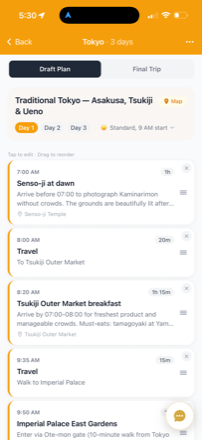
Your Itinerary
Google Maps
Start here
The Essential Florentine Dishes
Before picking a restaurant, know what you're looking for. These are the dishes that define Florence.
Bistecca alla Fiorentina€45–€65 per steak
A 1.2kg T-bone, three fingers thick, cooked rare. Don't ask for well-done — they'll refuse or give you the side-eye. The cut comes from Chianina cattle raised in the Val di Chiana, and the bone marrow is the best part. It rests for five minutes after grilling, gets hit with good olive oil and flaky salt, and arrives on a wooden board looking prehistoric. You split it between two people. This is not optional — it is tradition and also basic math.
Where: Trattoria Sostanza, Buca Mario, Perseus
Lampredotto€4–€5
Tripe sandwich from a street cart. Sounds awful, tastes incredible. The fourth stomach of a cow, slow-braised until meltingly tender, served on a semelle bun dipped in the cooking broth. The bagnato (wet) version — where they dunk the top half of the bread into the pot — is the only way to order it. Add salsa verde. Florentines eat this standing at a cart the way New Yorkers eat hot dogs, except this has been happening since the fifteenth century.
Where: Trippaio del Porcellino (Loggia del Porcellino), Trippaio di San Frediano (Oltrarno)
Ribollita€8–€12
Twice-cooked bread soup with cannellini beans, black cabbage (cavolo nero), and whatever vegetables are in season. Peasant food that tastes like home even if you have never been to Tuscany. The name literally means 'reboiled' — it was traditionally made on Monday with Sunday's leftover minestrone, thickened with stale bread. Best from October through March. In summer, order something else.
Where: Trattoria Mario, Il Latini
Schiacciata€5–€8
Florentine focaccia. Olive-oily, slightly salty, dimpled, sometimes stuffed with prosciutto crudo, mortadella, or finocchiona (fennel salami). The All'Antico Vinaio version has a permanent line snaking down Via dei Neri for a reason — they pile it with high-quality cured meats and local cheeses until the thing weighs half a kilo. During grape harvest in September, look for schiacciata all'uva — the sweet version buried under Chianti wine grapes.
Where: All'Antico Vinaio, Forno Pugi (near Piazza San Marco)
Pappa al Pomodoro€7–€10
Bread and tomato soup. Sounds boring, tastes like summer. Stale Tuscan bread (no salt — by design since the twelfth century), ripe tomatoes, garlic, basil, and enough olive oil to concern a cardiologist. Only order it from June through September when the tomatoes are real. If a restaurant serves it in February, they are using canned tomatoes and lying about it.
Where: Trattoria Sabatino, Trattoria Mario
Gelato€2.50–€4.50
If the gelato is piled in bright neon mounds with gummy bears on top, walk away. That is industrial mix with food coloring. Real artisan gelato is stored in covered metal tins (pozzetti) and the colors are muted. Pistachio should be grey-green, not nuclear. Banana should be off-white, not yellow. Stracciatella should have irregular chocolate shards, not uniform chips. Ask for a taste before committing. They expect it.
Where: Vivoli (oldest in Florence, since 1929), Gelateria dei Neri, La Carraia (best value — huge portions)
Crostini Toscani€6–€9 for a plate
Chicken liver pate on toasted bread. Every trattoria serves these as antipasto and they are the measure of a kitchen's soul. The liver should be creamy and slightly warm, not grainy and cold. Good versions use capers and anchovies in the mix. If they arrive ice-cold from a container, the restaurant is phoning it in and you should recalibrate your expectations for the rest of the meal.
Where: Any proper trattoria — if they cannot get this right, leave
Peposo€12–€16
Beef stew from the town of Impruneta, just south of Florence. Slow-cooked for hours with a genuinely ridiculous amount of black pepper and an entire bottle of Chianti. Legend says the kiln workers who made the terracotta tiles for Brunelleschi's dome invented it — they left the pot cooking in the kilns overnight. Not on every menu, which makes finding it feel like a small victory. Rich, dark, and deeply peppery.
Where: Trattoria Sabatino, Buca Mario
Centro Storico
Eating in Centro Storico
The tourist epicenter — and 80% of the restaurants here know it. They have laminated menus in six languages and a guy out front trying to pull you in. Avoid those. The places worth eating at in Centro are the ones that have not changed their menu or their attitude in decades.
Trattoria Mario
What to order: Ribollita, bistecca alla fiorentina (split it), pasta e fagioli. The house red comes in a carafe and costs almost nothing.
Cash only. Shared tables with strangers — this is the experience, not a drawback. No reservations, ever. Line up at 11:50 for the noon opening. Lunch only — they close when the food runs out, usually by 2pm. Closed Sundays and most of August.
Buca Mario
What to order: Bistecca alla fiorentina (their specialty), ribollita, and pappardelle al cinghiale. The house Chianti is reliable. Start with the crostini misti.
One of Florence's historic buca (cellar) restaurants, operating since 1886. The vaulted brick dining room underground feels like a medieval wine cellar. Slightly touristy but the food quality has stayed consistent for over a century — that's not an accident. Near Santa Maria Novella. Closed Wednesdays.
Perseus
What to order: Bistecca alla fiorentina — arguably the best value for a proper Fiorentina in the center. The meat is Chianina, the cook is confident, and you will not pay the premium of the famous-name steakhouses.
Worth the 15-minute walk north of the center, near Piazza della Libertà. This is not a tourist-zone restaurant — it's in a residential neighborhood, which is exactly why the quality stays high and the prices stay sane. Locals know it; visitors mostly don't. Book for dinner. Viale Don Minzoni 10r.
Oltrarno
Eating in Oltrarno
South of the Arno, where Florentines actually live and eat. This is the neighborhood that has not been entirely surrendered to tourism. The trattorias here feed regulars, not one-time visitors, which means the food has to be good enough to bring people back. It is.
Trattoria Sostanza (Il Troia)
What to order: The burro (butter) chicken breast — a deceptively simple dish on the menu since 1869. Cooked in an absurd amount of butter in a copper pan until golden. The tortino di carciofi (artichoke omelet) is the other non-negotiable order. Both arrive in the pan they were cooked in.
Reservations essential — call the restaurant directly, do not email or use apps. Cash only. Tiny room with shared marble tables. The nickname 'Il Troia' means 'the sow' — a ribald insult from the neighborhood. They kept it as a badge of honor.
Trattoria Sabatino
What to order: The menu del giorno — a full primo, secondo, bread, and water for about €8. The ribollita is soul food. The peposo, when available, is the sleeper hit. The boiled beef (bollito) with salsa verde is what everyone's nonna made.
A working-class lunch spot since 1956 and the single most Florentine dining experience you can have. No website, no Instagram presence, no English menu. The regulars are builders, mechanics, and pensioners. You will eat better here for €8 than at most €40 restaurants in the center.
Il Guscio
What to order: The seasonal menu that actually changes — unlike most trattorias that claim seasonal and serve the same thing year-round. The pasta dishes are inventive without being pretentious. Trust the daily specials.
A step up in ambition from the old-guard trattorias without losing the soul. Small room, reservations recommended for dinner. The wine selection leans toward smaller Tuscan producers you will not find at home.
Gustapanino
What to order: Lampredotto panino (the bagnato version), porchetta with salsa verde, or the daily special. Everything is made with artisan bread and high-quality ingredients that justify calling a sandwich gourmet.
When you want something quick, excellent, and cheap on the south side of the river. Perfect for a fast lunch between Palazzo Pitti and Santo Spirito.
San Lorenzo & Mercato Centrale
Eating in San Lorenzo & Mercato Centrale
The market district. Ground level of the Mercato Centrale is a real food market where Florentines buy their produce. The upper floor is a renovated food hall — touristy, yes, but the quality is curated and it is genuinely useful if you want variety or are traveling with picky eaters.
Mercato Centrale (Upper Floor)
What to order: Butterino for smash burgers with Chianina beef, Savini for truffle products (the truffle pasta is an acceptable splurge), the lampredotto stall on the ground floor for the real deal. The vegetable stalls downstairs sell ready-to-eat arancini and supplì.
Open daily until midnight, which makes it useful when everything else is closed. The upper floor opened in 2014 and was controversial — old-timers thought it was selling out the market's soul. They were partially right, but the food is still good.
Da Nerbone
What to order: Lampredotto sandwich (bagnato — wet), the bollito (boiled beef) panino, or the daily pasta. This is lunch, not dinner — they close in the afternoon. Eat standing at the counter or find a spot at the communal tables.
Operating inside the market since 1872 and serving the same food to the same type of customer — market workers who need something hot, fast, and substantial. The lampredotto here is considered by many to be the standard against which all others are measured.
Trattoria Za-Za
What to order: Ribollita, truffle pasta, bistecca. The outdoor seating on Piazza del Mercato Centrale is excellent for people-watching.
Tourist-popular and guidebook-listed, which means locals will tell you to avoid it. The truth is more nuanced — the ribollita is genuinely good, the location is unbeatable, and they have not fully surrendered quality for volume. Not a hidden gem, but not a trap either.
Santa Croce
Eating in Santa Croce
The neighborhood east of the Duomo, anchored by the Basilica di Santa Croce (where Michelangelo, Galileo, and Machiavelli are buried). Via dei Neri is the street food corridor — a 400-meter stretch of panini shops, gelaterias, and lampredotto carts. It is loud, crowded, and worth navigating.
Cibreo Trattoria
What to order: The yellow pepper soup (passato di peperoni gialli) is the signature — silky, vivid, perfect. Anything with the tripe. The stuffed chicken neck if it is on the menu. Do not ask for pasta — the late Fabio Picchi famously refused to serve it on principle, arguing that it was a crutch lazy kitchens used to fill you up cheaply.
The late Fabio Picchi's more affordable sibling to the formal (and very expensive) Cibreo Ristorante next door. Same kitchen, same food, lower prices, no reservations. The trattoria does not take bookings — show up and wait. The formal restaurant across the street takes reservations and costs roughly double.
Trattoria Anita
What to order: Whatever the daily special is. The ribollita, the roasted rabbit, the trippa alla fiorentina. This is not a place where you study the menu — you eat what they made today.
Cash only. Tiny, unpretentious, and the kind of place you walk past three times before finding because the sign is barely visible. No website. The decor has not been updated since sometime during the Cold War. This is a compliment.
All'Antico Vinaio
What to order: La Favolosa — crema di tartufata (truffle cream), sbriciolona (crumbly Tuscan salami), pecorino, and artichoke cream on fresh schiacciata. It is their most famous creation and it earned the reputation honestly. The prosciutto crudo with burrata and sun-dried tomatoes is the other essential order.
The most famous panini shop in Florence, possibly in Italy. There is always a line. It moves fast — 10-15 minutes at peak times. There are now four storefronts on the same street. They expanded because the demand was breaking the original tiny shop. Worth the wait. Not worth the Instagram reel.
San Marco
Eating in San Marco
The university and museum quarter north of the Duomo eats like a student and a professor at the same time: standing schiacciata on the piazza, handwritten daily menus, and honest prices the tourist zones abandoned years ago.
Pugi
What to order: Schiacciata all'olio, the potato and rosemary focaccia, and in September–October the schiacciata all'uva — grape flatbread that's basically a sacrament.
A Florentine institution since 1925. The lunch queue is students, professors, and construction workers — the best possible sign. No seating; eat standing on the piazza like everyone else. Closed Sundays.
La Mescita
What to order: Whatever the daily primo is, the tagliere of mixed salumi and pecorino, and a quartino of house Chianti. The pappa al pomodoro, when it's on, is textbook.
A bare-bones fiaschetteria between the Accademia and SS. Annunziata — paper placemats, handwritten menu, no English. The kind of place that's disappearing from Florence as rents climb. Lunch only, closed Sundays.
Ristorante Accademia
What to order: Pici cacio e pepe, the grilled octopus starter, pannacotta with seasonal fruit. Wine by the glass is focused and fairly priced.
Ignore the tourist-bait name — this is a family-run kitchen that actually cares. The outdoor tables on the piazza are the right speed for a slow lunch after the David. Reservations helpful for dinner.
San Niccolò
Eating in San Niccolò
One street below the San Miniato climb, San Niccolò packs Florence's best evening into 400 meters: a garden-courtyard dinner, a grandmother's blackboard lunch counter, and wine bars pouring serious Tuscan bottles. Come down from the sunset hungry.
Beppa Fioraia
What to order: Tagliatelle al ragù bianco, burrata with heritage tomatoes, and the chocolate soufflé — order it at the start of the meal; it takes 20 minutes.
A former flower shop at the base of the San Miniato climb, with a jasmine-draped courtyard garden that summer evenings were invented for. Reserve 2–3 days ahead for weekend dinner.
Zeb
What to order: Whatever the daily soup is — ribollita and pappa al pomodoro rotate — and the lasagna whenever it appears on the blackboard.
A tiny gastronomia with about 12 counter seats, run by a mother-and-son team. No menu choices, no fuss: you eat what Giuseppina cooked that morning, and it tastes like Sunday lunch at a Florentine grandmother's. Lunch only most days.
Fuori Porta
What to order: Crostoni on excellent schiacciata — lardo di Colonnata with honey, or burrata with 'nduja — plus whatever Chianti Classico Riserva they're pouring by the glass.
Primarily a wine bar, but the taglieri and crostoni are serious enough to be dinner. The outdoor tables near Porta San Niccolò are some of the most pleasant seats in the city in warm months.
Il Rifrullo
What to order: Tagliatelle al tartufo in season, the grilled tagliata with rocket and parmigiano, and the tiramisu. The aperitivo buffet is generous enough to replace a starter.
Aperitivo bar and proper restaurant in one, with a terrace on the neighborhood's main street. The drink-at-7, order-at-8:30 pipeline is a very Florentine way to spend an evening.
San Frediano
Eating in San Frediano
Florence's scrappiest quarter still eats like a working neighborhood: two of the city's last true workers' canteens, a post-Brancacci trattoria on the church square, and — as the contrast — its one genuinely upscale kitchen. Prices here will recalibrate what you think Florence costs.
Trattoria Sabatino
What to order: Ribollita, peposo, bollito misto. A full primo, secondo, side, house wine, and water comes to €12–15 per person. Not a typo.
The most honest meal in Florence, served under fluorescent lights at formica tables since 1956. Cash only, no reservations; locals start queuing at 11:50 for the noon opening. Go at 12:15 to walk straight in.
Il Brindellone
What to order: Trippa alla fiorentina, ribollita, tagliatelle al ragù. The Thursday bollito misto is the weekly event — order it if it's on.
Sabatino's slightly more polished sibling, feeding the neighborhood since the 1950s. Enormous portions, honest prices, 95% local clientele, and a dining room with a time-capsule quality. Closed Tuesdays.
Trattoria del Carmine
What to order: Crostini neri, then pappardelle al cinghiale or ribollita, followed by bistecca or arista di maiale. House Chianti does the job.
Thirty seconds from the Brancacci Chapel and the obvious post-chapel lunch — but it earns the spot on merit. The ragù simmers for hours and the terrace faces the church in warm months. Reservations helpful for dinner.
Gurdulù
What to order: The tasting menu is the best way in. À la carte: the raw fish starters, handmade pasta with seasonal ragù, and anything involving Cinta Senese pork.
San Frediano's one upscale kitchen — Tuscan ingredients, modern technique, small-producer Tuscan wine list. Where you come when you want the neighborhood's energy with a more polished plate. Reservations essential; closed Mondays.
Save money
Budget Eating Tips
Florence isn't cheap, but it doesn't have to break you.
Eat lunch at trattorias offering 'menu del giorno' (daily menu) — typically €10-€12 for primo + secondo + water. Trattoria Sabatino does this better than anywhere else in the city.
All'Antico Vinaio makes the best €5-€8 panini in Italy. The line moves fast. Go at 11:30am or after 2:30pm to avoid the worst of it.
Coperto (cover charge) is €2-€3 per person and is perfectly legal. It covers bread, water, and table service. Do not fight it, do not leave a passive-aggressive TripAdvisor review about it. It is how Italian restaurants work.
Standing at the bar for espresso costs €1-€1.20. Sitting at a table costs €2.50-€4 for the same coffee. This is not a scam — it is the servizio al tavolo (table service) pricing system that has existed since forever. Drink at the bar like a local.
Aperitivo hour (6-8pm) at most bars comes with a free buffet when you order a drink. One €8-€10 Spritz or Negroni gets you enough crostini, bruschetta, and small bites to call it dinner. Volume Firenze and Sei Divino in Oltrarno are good for this.
Tap water (acqua del rubinetto) is free and perfectly safe. Asking for it is legal but you will occasionally get a look. Most Florentines drink bottled — San Benedetto or Panna — but there is nothing wrong with the tap.
Wine in trattorias is sold by the quarter or half liter (quarto or mezzo litro). A quarto of house red costs €3-€5 and is usually a perfectly drinkable Chianti. Ordering by the bottle only makes sense at restaurants with a serious wine list.
Skip any restaurant where someone stands outside trying to wave you in. This practice is the single most reliable indicator of bad food in Florence. Good restaurants do not need to recruit from the sidewalk.
Pronto a partire?
Plan Your Florence Trip
Three days is the sweet spot for eating your way through Florence — every meal slot already planned.
See the 3-Day ItineraryFrequently Asked Questions
At the famous trattorias — Sostanza, Cibreo Trattoria, Buca Mario — yes, especially for dinner and especially from April through October. Call directly; most old-school places do not use online booking systems. Trattoria Mario and Da Nerbone do not take reservations at all — you line up. For casual lunch at mid-range spots, you can usually walk in before 12:30pm without trouble.
Yes. Most traditional trattorias serve lunch from 12:00-2:30pm and dinner from 7:30-10:00pm. Between 3pm and 7pm, your options are panini shops (All'Antico Vinaio), the Mercato Centrale food hall (open all day until midnight), gelaterias, and bars. This is not a flaw — it is how Italian dining works. Plan around it.
Tipping is not expected or required in Italy. The coperto (cover charge) and servizio (service charge, if listed) are built into the bill. If the service was genuinely excellent, leaving €1-€2 per person or rounding up the bill is appreciated but never obligatory. Do not tip 15-20% — you will confuse the staff and distort the local economy for the next tourist.
Locals eat dinner between 8:00pm and 9:30pm. If you are sitting down at 6:30pm, you are eating with other tourists and the kitchen is not fully warmed up. The sweet spot for a trattoria dinner is arriving at 8:00pm — early enough to get a table, late enough that the kitchen is in rhythm. Aperitivo from 6-7:30pm bridges the gap perfectly.
Not universally, but the ratio of bad-to-good is much worse than in Oltrarno or San Lorenzo. The closer you are to major tourist monuments, the higher the rent and the lower the incentive to cook well — because the customer is never coming back. Walk 10 minutes in any direction from the Duomo and the quality jumps dramatically. Trattoria Mario is technically near the center but serves a local crowd, which keeps them honest.
You will not starve, but Florentine cuisine is deeply, unapologetically meat-centric. That said: ribollita is vegetarian (when made without meat broth — ask), pappa al pomodoro is vegetarian, most pasta dishes have a vegetarian option, and every trattoria serves grilled vegetables and beans. Cibreo Trattoria has several excellent vegetable-forward dishes. The real struggle is avoiding the temptation of bistecca fumes wafting from every other doorway.