Quartiere
San Lorenzo
Michelangelo's genius, the Medici dynasty's final resting place, and a leather market gauntlet you'll need a strategy to survive.
Powered by ITINE
Get this guide as a tappable itinerary
Day-by-day plan, audio tours, and one-tap Google Maps — completely free.
Destinations
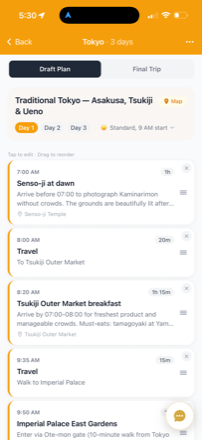
Your Itinerary
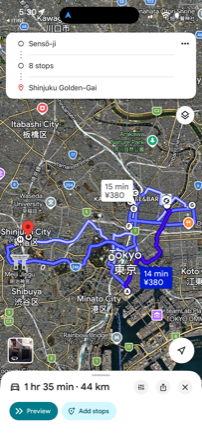
Google Maps
The Medici Chapels contain Michelangelo's New Sacristy (Sagrestia Nuova) — four of his most powerful sculptures in a space he designed himself. Dawn, Dusk, Night, and Day are worth the €9 admission ten times over.
The outdoor leather market surrounding the basilica is 90% mass-produced tourist goods sold at 'handmade Italian' markups. That €80 'leather' jacket is almost certainly bonded leather from a factory. Save your money for a real artisan in Oltrarno.
Mercato Centrale's ground floor is the real Florence food market: butchers, lampredotto carts, cheese vendors, and Da Nerbone's bollito sandwiches since 1872. The upstairs food court is fine but overpriced — skip it.
Brunelleschi's Basilica di San Lorenzo is the Medici family parish church and one of the purest expressions of Renaissance architecture in existence. The facade was never finished — Michelangelo designed one, but the Medici ran out of money. The bare stone front is oddly beautiful.
The Biblioteca Medicea Laurenziana, accessible through the basilica cloister, has Michelangelo's famous vestibule staircase — a piece of architecture so theatrical it basically invented Mannerism.
Best For
Renaissance architecture obsessives who want to see Michelangelo and Brunelleschi in the same morning, foodies who want the authentic ground-floor Mercato Centrale experience, and anyone curious enough to walk past the leather gauntlet to find the real San Lorenzo underneath.
Skip If
You have zero tolerance for aggressive street vendors shouting 'nice leather, good price!' every four seconds. The outdoor market corridor between the basilica and Mercato Centrale is relentless, and there's no avoiding it geographically — you have to walk through it to get between the major sights.
Walking route
Palazzo Medici Riccardi, Via Cavour 3 to Mercato Centrale, Via dell'Ariento
Palazzo Medici Riccardi
25–35 min insideStart here on Via Cavour. This was the Medici family's private palace from 1444 to 1540 — the building where Cosimo the Elder, Lorenzo the Magnificent, and three popes grew up. The courtyard is free to enter and worth a look for Donatello's medallions, but the real reason to pay the €10 admission is Benozzo Gozzoli's Chapel of the Magi on the first floor. The fresco cycle (1459) covers every wall in a procession of Medici family members disguised as the Three Kings, riding through an idealized Tuscan landscape with extraordinary botanical detail. The room is tiny and visits are limited to 7 people at a time for 15 minutes — which means it's never crowded. The upstairs Luca Giordano gallery ceiling fresco is theatrical Baroque excess, an interesting contrast to the intimate Gozzoli chapel below.
Biblioteca Medicea Laurenziana
15–20 minWalk south on Via Cavour, turn right on Via de' Gori, and enter through the San Lorenzo basilica cloister. Michelangelo designed this library for Pope Clement VII (a Medici) in 1524, and the vestibule staircase is one of the most photographed pieces of architecture in Italy. The triple-flight stone staircase seems to pour down from the reading room like a flow of lava — it breaks every classical rule that Brunelleschi established next door, and that was entirely the point. The reading room itself is surprisingly calm: long wooden desks, terracotta floor tiles designed by Michelangelo, and natural light from both sides. Check for rotating manuscript exhibitions — the collection includes a 5th-century Virgil.
Basilica di San Lorenzo
20–30 minExit the library and enter the basilica through the cloister. Brunelleschi designed this church starting in 1421 and it's considered the first full expression of Renaissance architecture: mathematical proportions, grey pietra serena columns against white walls, classical arches instead of Gothic points. The overall effect is one of extraordinary calm. Look for Donatello's bronze pulpits (his last work, finished by students after his death in 1466) and Filippo Lippi's Annunciation. Donatello is buried here, in the crypt, near Cosimo the Elder — the man who commissioned most of what you're looking at. The unfinished facade outside is rough stone that was supposed to get a Michelangelo-designed marble front. The Medici pope died before it happened, and nobody since has dared to finish someone else's design.
Medici Chapels (Cappelle Medicee)
30–45 minWalk around the back of the basilica to the separate Medici Chapels entrance on Piazza di Madonna degli Aldobrandini. You'll pass through the massive Chapel of the Princes first — a Baroque octagonal mausoleum covered in semi-precious stone inlay (pietre dure) that took 200 years to complete and is deliberately overwhelming. But the New Sacristy (Sagrestia Nuova) is why you're here. Michelangelo designed the entire room — architecture, sculpture, everything — between 1520 and 1534. The four allegorical figures on the Medici tombs (Dawn, Dusk, Night, and Day) are among the most powerful sculptures in Western art. Night is the one with the owl and the crescent moon under her leg; Dawn twists as if waking in pain. Take your time here. Sit on the bench and look up at the architecture. The room works as a complete artistic statement in a way that very few spaces in the world can match.
Piazza San Lorenzo & the Leather Market
10–15 minExit the chapels and walk through Piazza San Lorenzo. The statue of Giovanni delle Bande Nere (a Medici condottiero, by Baccio Bandinelli) sits in the middle of the square, mostly ignored by tourists fixated on the surrounding leather stalls. This is where you'll enter the outdoor market zone — rows of canvas-topped stalls selling leather bags, belts, wallets, scarves, and souvenirs. The reality: about 90% of it is mass-produced, often not even real leather. If a vendor can't tell you the specific tannery and type of leather, it's not artisanal. Walk through with purpose, enjoy the spectacle, but save your leather budget for Scuola del Cuoio in Santa Croce or the workshops across the river in Oltrarno.
Cenacolo di Sant'Apollonia
10–15 minDetour slightly north to Via XXVII Aprile 1. This former convent refectory contains Andrea del Castagno's Last Supper (1447), painted a full half-century before Leonardo's more famous version in Milan. It's free, almost always empty, and the fresco — with its dramatic marbling and Judas isolated on the near side of the table — is a stunning example of early Renaissance monumental painting. The museum is small (one room, essentially) and takes 10 minutes, but the experience of having a masterpiece fresco entirely to yourself is increasingly rare in Florence. Open daily except the 2nd and 4th Mondays of the month.
Mercato Centrale
20–40 minEnd at the 19th-century iron-and-glass market hall on Via dell'Ariento. Ignore the upstairs food court (opened 2014, tourist-oriented, €12–16 plates) and go straight to the ground floor. This is where Florentine home cooks actually shop: seasonal vegetables piled high, whole rabbits and pigeons at the butcher stalls, wheels of Pecorino, jars of artichoke hearts in oil. Da Nerbone, in the back corner since 1872, serves bollito (boiled beef) and lampredotto (tripe) sandwiches for €4–5. The line moves fast. Order the bollito with salsa verde, eat it standing at the metal counter, and you've just had the most authentically Florentine lunch in the neighborhood for less than a glass of wine costs upstairs.
End at Mercato Centrale, Via dell'Ariento
What to see
Sights & Attractions
Basilica di San Lorenzo
Brunelleschi's 1421 masterpiece and the Medici family parish church for three centuries. The interior is Renaissance architecture at its most distilled: grey pietra serena stone columns, white plaster walls, mathematical proportions that make the space feel larger and calmer than it actually is. Donatello's two bronze pulpits (1460s, his final works) flank the nave with intense relief panels depicting the Passion — look closely and you'll see the panels are unfinished, completed by assistants after his death. Filippo Lippi's Annunciation hangs in the left transept. The crypt below contains the tombs of Donatello and Cosimo de' Medici, placed directly under the altar at Cosimo's request. The bare stone facade — intended to receive Michelangelo's marble design that was never executed — gives the building an honest, unvarnished quality that perfectly suits its interior philosophy.
Tip: The basilica opens at 10am on weekdays, 1:30pm on Sundays. Go right at 10am opening — by 11am the first tour groups cycle through from the nearby Accademia. The Old Sacristy (Sagrestia Vecchia) by Brunelleschi, in the left transept, is often overlooked — it predates Michelangelo's New Sacristy across the way and is a gorgeous little space.
Medici Chapels (Cappelle Medicee)
Two radically different burial spaces for the Medici dynasty, entered from behind the basilica. The Chapel of the Princes (Cappella dei Principi) is a colossal Baroque octagon covered floor-to-ceiling in inlaid semi-precious stones — jasper, lapis lazuli, mother of pearl — that took craftsmen nearly two centuries to complete. It's deliberately excessive. But the New Sacristy (Sagrestia Nuova) next door is the reason you're here. Michelangelo designed the room, the tombs, and the four allegorical sculptures between 1520 and 1534. Night reclines with an owl, poppies, and a crescent moon; Dawn twists in agony; Day turns his unfinished face away; Dusk fades into sleep. The architecture and sculpture work together as a complete meditation on time, mortality, and power. Sit on the stone bench, look up at the blind windows and the pendentives, and give yourself at least 15 minutes. This room is one of the supreme achievements of Western art.
Tip: Closed on the 1st, 3rd, and 5th Mondays plus the 2nd and 4th Sundays of each month. This catches a lot of visitors off guard — check the schedule before you walk over. Go early in the morning; the New Sacristy gets crowded by 11am.
Biblioteca Medicea Laurenziana
Michelangelo's library for Pope Clement VII, built 1524–1559, is one of the most influential architectural interiors ever designed. The vestibule staircase is the main event: a triple-flight stone staircase that seems to pour down from the reading room above like a geological flow. The columns are set into the walls rather than projecting from them, the brackets support nothing, the proportions deliberately violate Brunelleschi's classical rules. This is Michelangelo basically inventing Mannerism — using the grammar of classical architecture to say something entirely new. The reading room upstairs is serene by contrast: long wooden reading desks (original, designed by Michelangelo), a terracotta tile floor in his pattern, and natural light from clerestory windows. The library hosts rotating exhibitions of its manuscript collection, which includes medieval Bibles, Virgil codices, and Medici correspondence.
Tip: Access is through the basilica cloister, not from the street. Look for the small door off the second cloister. Photography is usually allowed in the vestibule but not in exhibition rooms. The staircase alone is worth the detour — don't skip this even if you're short on time.
Mercato Centrale (Ground Floor)
The iron-and-glass market hall, built by Giuseppe Mengoni (who also designed Milan's Galleria) in 1874, has two very different floors. The ground floor is the authentic one: local butchers with whole rabbits hanging from hooks, fishmongers shouting prices, vegetable sellers with seasonal produce stacked in careful pyramids, cheese vendors who'll let you taste before you buy. This is where Florentine home cooks actually shop. Da Nerbone in the back corner has been serving bollito and lampredotto sandwiches since 1872 — the line looks long but moves fast, and a sandwich costs €4–5. The upstairs food court (opened 2014) has a dozen stations serving pizza, pasta, burgers, and craft beer at €12–18 per plate. It's competent but soulless — a food-hall concept designed for tourists. Eat downstairs.
Tip: The ground floor is open Monday–Saturday, 7am–2pm (some stalls stay until 3pm on Saturdays). If you arrive after 1:30pm, many stalls are closing. Saturday morning is the liveliest. Closed Sundays. The upstairs food court has longer hours (10am–midnight daily) if you need an evening option.
San Lorenzo Outdoor Leather Market
Let's be honest. The stalls filling the streets around the basilica — Via dell'Ariento, Via del Canto de' Nelli, Piazza San Lorenzo — sell mostly mass-produced goods. That 'genuine Italian leather' jacket for €80–150 is almost certainly bonded leather (scraps glued together) or outright synthetic from a factory that's nowhere near Tuscany. The bags are the same ones you'll see in tourist markets in Rome, Venice, and Barcelona. Some vendors are pleasant; others are pushy to the point of grabbing your arm. The experience of walking through is colorful and chaotic, and it has its own energy — but don't buy anything here expecting artisan quality. For real Florentine leather, visit Scuola del Cuoio inside the Santa Croce basilica complex, or cross the Arno to Oltrarno workshops like Dimitri Villoresi or Il Bisonte. You'll pay more, but you'll get actual Tuscan leather worked by actual Florentine hands.
Tip: If you must buy something here, check the interior lining for a 'Vera Pelle' stamp and smell the material — real leather has a distinct natural scent, while bonded leather smells like chemicals or has no smell at all. The best quality in the outdoor market is usually at the stalls closest to the basilica itself, not on the outer edges.
Palazzo Medici Riccardi
The first Medici palace, commissioned by Cosimo the Elder from Michelozzo in 1444, and the template for every Renaissance palazzo that followed. The rusticated stone exterior was deliberately less grand than Cosimo's wealth could have afforded — he was playing politics, not wanting to look like a king in a republic. Inside, the courtyard is elegant with Donatello's roundels, but the jewel is upstairs: Benozzo Gozzoli's Chapel of the Magi (1459). This tiny private chapel is covered floor-to-ceiling with a fresco cycle depicting the Three Kings processing through an idealized Tuscan landscape — except the 'kings' are thinly disguised Medici family portraits. Lorenzo the Magnificent (as a teenager) rides a white horse at the front. The detail is extraordinary: every flower, every horse, every brocade pattern is rendered with miniaturist precision. Visits are capped at 7 people for 15 minutes, which makes it one of the most intimate and uncrowded art experiences in Florence.
Tip: The 7-person limit for the Gozzoli chapel means you sometimes wait 15–20 minutes for your turn. Go at opening (9am) or between 1–2pm when tour groups are at lunch. The chapel is small and warm — your viewing window goes fast, so study photos beforehand so you know what to look for.
Cenacolo di Sant'Apollonia
A free, nearly empty museum containing one of the great Early Renaissance frescoes in Florence. Andrea del Castagno painted this Last Supper in 1447 for the convent refectory — a full fifty years before Leonardo's more famous version in Milan. Castagno's interpretation is rawer and more confrontational: the marble paneling behind the apostles creates an almost oppressive sense of space, and Judas sits isolated on the near side of the table, his face a mask of guilt. The figures have a sculptural solidity that influenced later Florentine painters, and the illusionistic architecture above the scene (scenes of the Crucifixion, Deposition, and Resurrection) adds a visionary intensity. The space is a single room in a former convent on Via XXVII Aprile, two blocks north of the basilica, and it's genuinely rare to find more than three or four other visitors here. One of Florence's best-kept secrets, in a city that's rapidly running out of them.
Tip: Open daily 8:15am–1:50pm, closed on the 2nd and 4th Mondays and the 1st, 3rd, and 5th Sundays of each month. The closing schedule is confusing — check before you go. It's a 4-minute walk north from the basilica and worth the slight detour.
Piazza San Lorenzo
The square in front of the basilica is dominated by the outdoor leather market stalls during the day, which makes it hard to appreciate as a public space. But come early in the morning (before 8am) or after the vendors pack up (around 7pm) and you'll see it for what it is: a generous, slightly sloping piazza with the raw stone facade of Brunelleschi's basilica on one side and the Baccio Bandinelli statue of Giovanni delle Bande Nere — a Medici military commander and father of the first Grand Duke — in the center. The steps of the basilica are a popular sitting spot for locals and students in the evening. The piazza connects the basilica complex to the south with the market streets leading to Mercato Centrale to the north, making it the geographic pivot point of the entire neighborhood.
Tip: The basilica steps face southwest and catch excellent late afternoon light. If you want a photo of the unfinished facade without a sea of market stalls, come before 8am or after 7pm.
Where to eat
Restaurants
Trattoria Mario
€Traditional Florentine
Order: Ribollita (€6), the daily pasta special (€7–8), bistecca alla fiorentina for two (€45/kg — a half-kilo feeds most couples). The ragu with fresh pasta on Thursdays is exceptional.
Cash only, no reservations, communal tables with strangers, lunch service only (noon–2:30pm), closed Sundays. The queue starts forming at 11:45am — arrive at 11:30 to get a seat in the first wave. They close when the food runs out. This is the one restaurant in the San Lorenzo tourist zone that genuinely deserves its reputation. Three generations of the same family. Via Rosina 2, directly behind Mercato Centrale.
Da Nerbone
€Florentine market food
Order: Bollito sandwich with salsa verde (€4.50), lampredotto sandwich (€4.50) — the tripe version for the adventurous. A plate of bollito with white beans and broth costs €6.
A stall inside Mercato Centrale's ground floor since 1872 — not a restaurant, a market counter with metal stools. The bollito (boiled beef brisket) sandwich dipped in its own cooking broth is the quintessential Florentine working-class lunch. The lampredotto (cow stomach) is an acquired taste but beloved locally. Order at the counter, eat standing or on the few available stools. Morning through early afternoon only. This is the most authentic €5 you'll spend in Florence.
Trattoria lo Stracotto
€€Tuscan home cooking
Order: Peposo dell'Impruneta (€14) — a slow-braised beef stew with black pepper and Chianti that's a Tuscan farmhouse classic. Pappa al pomodoro (€8), tagliatelle al ragu (€10).
A small, family-run trattoria on Via del Moro, about a 5-minute walk west of Mercato Centrale. No English menu until recently, which kept it off the tourist radar. The peposo alone is worth the walk — dark, peppery, falling-apart beef that tastes like someone's Tuscan grandmother made it, because someone's Tuscan grandmother did. Reservations recommended for dinner. Closed Mondays.
Trattoria Sergio Gozzi
€Traditional Florentine
Order: Daily specials written on the blackboard (€7–10). Tuesday is trippa alla fiorentina, Wednesday is boiled tongue. Penne strascicate (€7) and the house Chianti by the quarter-liter (€3).
A no-frills trattoria on Piazza San Lorenzo that's somehow survived surrounded by tourist restaurants. The blackboard menu changes daily, portions are enormous, and the clientele is a mix of market vendors, construction workers, and savvy tourists. Cash only, lunch is the main event (noon–2:30pm). Dinner exists but the energy is at midday. Piazza San Lorenzo 8r.
Casa del Vino
€Wine bar with crostini
Order: Crostini misti (€1.50 each — try chicken liver, lardo, and baccala), a glass of Morellino di Scansano (€4), or the tagliere of mixed Tuscan salumi (€10).
A tiny, standing-room-only wine bar on Via dell'Ariento that's been open since 1946. The owner knows every wine on the shelf personally. Florentine market workers have been stopping in for a glass and a crostino at 10am for decades, and that tradition continues. No seating, no pretension, no Instagram aesthetic — just excellent wine by the glass and some of the best crostini in the neighborhood. Closed Sundays. Via dell'Ariento 16r.
Where to drink
Bars, Cafes & Wine
Casa del Vino
wine barOrder: A glass of Chianti Classico Riserva (€5–7) or Vernaccia di San Gimignano (€4) with a crostino al lampredotto (€1.50). Ask the owner what's open — he'll steer you right.
Florence's most authentic standing wine bar, tucked on Via dell'Ariento between the leather market stalls. Market vendors and local workers have been drinking here since 1946. No craft cocktails, no Edison bulbs, no table service. Just an old man who knows wine, a glass case of crostini, and the sound of the market outside. Open mornings through early afternoon, closed Sundays.
Mercato Centrale Ground Floor Wine Stalls
wine barOrder: A glass of Rosso di Montalcino (€5) or Chianti Colli Senesi (€4) from the wine vendors on the ground floor. Some stalls let you taste before buying a bottle.
Several vendors on the ground floor of Mercato Centrale sell wine by the glass alongside cheese and salumi. It's not a bar — you're standing at a market stall — but the wines are local, the prices are fair, and pairing a glass with a chunk of aged Pecorino and some finocchiona salami at 11am on a Saturday is one of Florence's small pleasures.
Caffè San Lorenzo
cafeOrder: Espresso at the bar (€1.20) or a cappuccino (€1.80). Skip the pastries and go to the market for breakfast instead.
A no-frills neighborhood bar on Piazza San Lorenzo frequented by market workers and basilica staff. The coffee is solid, the prices are local (not tourist-inflated), and standing at the bar watching the leather vendors set up their stalls at 8am gives you a slice of daily Florentine life that the food court upstairs will never provide. Cash preferred.
La Ménagère
aperitivoOrder: A Negroni (€10) or Aperol Spritz (€9) with the complimentary aperitivo snack spread from 6:30pm. The cocktails are well-made if not revolutionary.
A concept space (restaurant, flower shop, cafe, cocktail bar) on Via de' Ginori, 3 minutes from Palazzo Medici Riccardi. It's more designed and Instagrammable than the other options on this list, but the aperitivo hour is genuinely good: well-mixed classics, decent complimentary snacks, and a beautiful interior with hanging plants and vintage furniture. Good for winding down after a morning of Medici overload. Open daily until midnight.
Segreto locale
Insider Tips
The Medici Chapels have a confusing closure schedule: closed on the 1st, 3rd, and 5th Mondays plus the 2nd and 4th Sundays of each month. Check museiitaliani.it before you plan your day, or you'll arrive to find a locked door.
The outdoor leather market runs Monday–Saturday, roughly 8am–7pm (shorter hours in winter). Vendors expect bargaining — start at 50% of the asking price and settle around 60–70%. But remember: you're negotiating for mass-produced goods, not artisan pieces.
Mercato Centrale's ground floor keeps different hours from the upstairs food court. Ground floor: Monday–Saturday 7am–2pm (Saturday until 3pm). Upstairs: daily 10am–midnight. If you arrive for 'the market' at 6pm, you'll only find the tourist food court.
Da Nerbone and Trattoria Mario both close mid-afternoon and are cash only. Bring euros. The nearest ATM is on Via Cavour, a 2-minute walk from either spot.
Palazzo Medici Riccardi's Gozzoli chapel limits entry to 7 people at a time for 15-minute rotations. Go at opening (9am) or between 1–2pm. If you arrive at 11am with a tour group, expect a 20–30 minute wait for the chapel alone.
The Cenacolo di Sant'Apollonia (free Andrea del Castagno Last Supper) is north of the main tourist flow and almost nobody visits. It's a 4-minute walk from the basilica — don't skip it. Open 8:15am–1:50pm with a confusing monthly closure pattern.
For genuine Florentine leather goods near San Lorenzo, the only real option is to leave San Lorenzo. Walk 15 minutes to Scuola del Cuoio (Santa Croce) or 20 minutes to the artisan workshops in Oltrarno. The street market is not the place.
The basilica, library, and chapels all have different entrances and separate tickets. The basilica + library is accessed from the front (Piazza San Lorenzo side) at €9. The Medici Chapels have a completely separate entrance around the back on Piazza di Madonna degli Aldobrandini at €9. You need both tickets to see everything.
Getting here
From the Duomo
On foot
5 minutes from the Duomo, 8 minutes from Santa Maria Novella station
Walk north on Via de' Martelli (which becomes Via Cavour), turn left on Via de' Gori. Palazzo Medici Riccardi is on your right as you head up Via Cavour, the basilica and market are one block west. Total walk is about 5 minutes from the Duomo to the basilica.
By bus
Bus C1 stops on Via Cavour near Palazzo Medici Riccardi. Lines 1, 6, 14, 17, and 23 stop at the train station, which is a 5-minute walk west.
Our take: Walk from the Duomo — it's barely 5 minutes and the route through Via de' Martelli is pleasant. If you're coming from the train station, walk east on Via Nazionale or cut through Via Faenza. Start your San Lorenzo visit at Palazzo Medici Riccardi on Via Cavour and work your way west toward the basilica and Mercato Centrale. This puts you in the right direction to end at the market for lunch.
Pronto a partire?
Plan Your Florence Trip
Browse our locally tested itineraries with exact times, costs, and the tips that guidebooks leave out.
See the 2-Day ItineraryFrequently Asked Questions
The walking route takes 1.5–2 hours without lingering inside museums. Add 30–45 minutes for the Medici Chapels interior (essential), 15–20 minutes for the Laurenziana Library, 25–35 minutes for Palazzo Medici Riccardi, and 20–40 minutes for Mercato Centrale browsing and lunch. A thorough visit with all interiors and a market lunch takes about 3.5–4 hours. If you only have an hour, do the Medici Chapels and the Mercato Centrale ground floor — those are the two non-negotiable experiences.
For the experience of walking through a chaotic open-air market, yes. For actually buying quality leather goods, no. About 90% of the merchandise is mass-produced from bonded leather or synthetic materials and sold at inflated prices. Vendors are persistent and bargaining is expected. If you want real Florentine leather, visit Scuola del Cuoio in Santa Croce (15 minutes east) or the artisan workshops in Oltrarno (20 minutes south). That said, the market is part of the San Lorenzo character and walking through it is a Florence rite of passage — just keep your expectations and your wallet in check.
They're part of the same complex but have separate entrances and separate tickets. The Basilica (€9, entered from Piazza San Lorenzo) is Brunelleschi's church with Donatello's pulpits and access to the Laurenziana Library. The Medici Chapels (€9, entered from Piazza di Madonna degli Aldobrandini, around the back) contain the Chapel of the Princes and Michelangelo's New Sacristy. You need both tickets to see everything. They have different closure days — the chapels have a particularly confusing schedule (closed 1st/3rd/5th Mondays and 2nd/4th Sundays).
Downstairs, without question. The ground floor is the authentic market where Florentines shop — Da Nerbone has served bollito and lampredotto sandwiches since 1872 for €4–5. The upstairs food court (opened 2014) is a tourist-oriented operation with €12–18 plates that are competent but unremarkable. You can get a better pasta for less money at Trattoria Mario around the corner. The only reason to go upstairs is if you need a late dinner (it's open until midnight) or if the ground floor is closed (it shuts at 2pm weekdays).
No. Despite being part of the same architectural complex, they operate as separate institutions with separate tickets (€9 each) and separate entrances. The basilica ticket covers the church interior, the cloister, and the Biblioteca Medicea Laurenziana. The Medici Chapels ticket covers the Chapel of the Princes and Michelangelo's New Sacristy. Budget €18 total to see everything, plus €10 if you want to add Palazzo Medici Riccardi. There's no combo ticket.
San Lorenzo is safe. The market vendors can be persistent — some will call out to you, hold up bags, or step into your path — but it's commercial pushiness, not aggression. A firm 'no grazie' and continued walking works every time. Pickpocketing is a real concern in the crowded market streets, as it is anywhere in tourist Florence: keep valuables in front pockets or a crossbody bag, and be aware of your surroundings when the crowd thickens. After the market closes in the evening, the streets are quiet and safe.